Guides
Childcare center equipment on a budget: used versus new
Compare new and used childcare center equipment by route, covering buying new, buying used, leasing and renting, plus the safety checks each option demands.
What to take away
- Childcare center equipment on a budgetused versus new is a per-item call, because a crib and a billing system age at different speeds.
- A crib, a changing table and a playground surface are the three items where used stock most often fails a licensing inspection.
- Buying used saves cash up front and costs more in repair labor, so price the repair hours before you commit.
- Leasing suits software and anything that dates quickly; renting suits a one-off need, not a full classroom.
- Ask the seller for the model number, the manufacture date and the original manual before you pay.
- Confirm your state or provincial licensing rules for the specific item before you buy it used.
Where the money actually goes
A childcare center buys two kinds of things. One kind lasts a decade: cribs, cubbies, tables, a changing station. The other dates within three years: billing software, tablets, a sign-in kiosk.
New versus used is not one decision. It is a decision per item, and the answer flips depending on which kind you are buying.
The arithmetic is simple once you name the variables. Take the purchase price, add freight and any assembly, add the expected repair cost over the years you will keep it, then divide by those years.
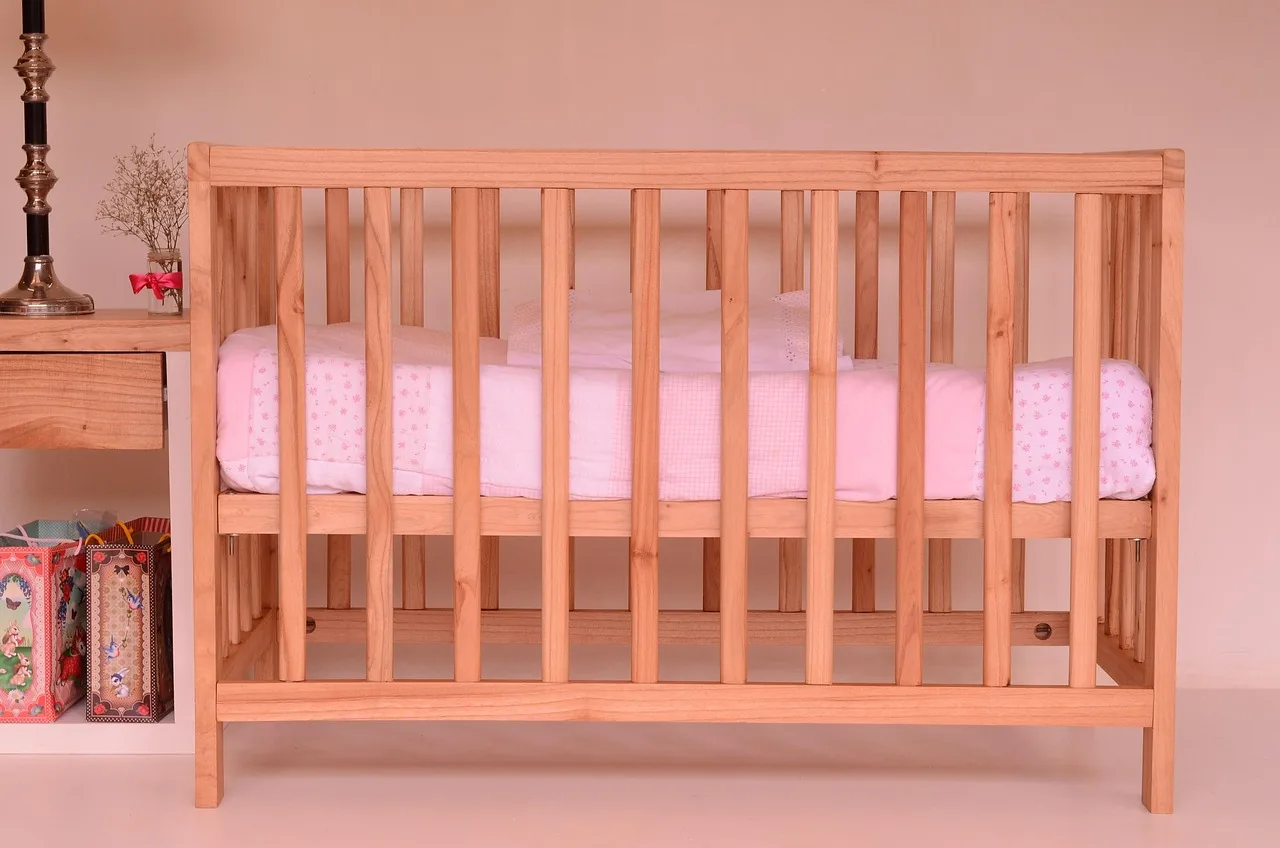
A new crib at $300 kept eight years costs $37.50 a year before repairs. A used crib at $90 that needs a $60 mattress and two repairs at $40 each over four years costs $57.50 a year. The used one still wins on cash today. It loses on annual cost.
Run that sum for every item on your list before you decide anything. Childcare center equipment that survives daily use for years is usually worth buying new.
Named cribs show the gap. Angeles and Foundations full-size cribs typically list from $400 to $700 new. Used cribs from center closures often sell for $80 to $150.
The five routes, side by side
Suits a center when
- New purchase
- The item runs daily for years and a failure stops a room
- Buy used
- The item is simple, inspectable and repairable, and you can verify its history
- Lease
- The item dates quickly, such as billing or attendance software
- Rent per job
- You need a specialist item for weeks, not years
- Shared or subcontracted
- A neighboring center or a contractor owns the item and you buy hours on it
Trade-off
- New purchase
- Highest cash outlay; depreciation starts immediately
- Buy used
- Service history is often missing; parts may be discontinued
- Lease
- Total cost over the term exceeds buying outright
- Rent per job
- Availability fails on your busiest days; no equity
- Shared or subcontracted
- Scheduling conflicts; the parent may not see who provides it
Named example
- New purchase
- Kaplan Early Learning and Lakeshore Learning catalogs; Angeles and Foundations cribs typically $400 to $700
- Buy used
- Facebook Marketplace, Kijiji, Craigslist, school surplus auctions; used cribs often $80 to $150
- Lease
- Brightwheel and Procare subscriptions; typical center plans $50 to $200 per month
- Rent per job
- United Rentals or Sunbelt Rentals floor scrubbers; typical $50 to $150 per day in most markets
- Shared or subcontracted
- Neighboring center or contractor; hours billed per job
Most centers use three of these at once. New cribs and changing tables, leased software, rented floor-cleaning equipment.
What to buy new, and what to buy used
Buy new: cribs, changing tables, car seats for any transport, and anything a licensing officer inspects against a safety standard. The manufacturer's date and certification label matter, and a used unit may predate the current standard.
Buy used with confidence. This includes cubbies, shelving, tables, and chairs. It also includes storage bins, books, dramatic-play furniture, and outdoor ride-on toys without moving parts. These carry no safety certification that expires.
Buy used with care: playground structures, climbers, and any surfacing. Wear, UV damage and missing hardware are hard to see in a photo, and replacement parts for a discontinued model can be impossible to source.
Software is its own case. A used license is usually not transferable, so treat billing and attendance software as a lease or a subscription, not a purchase.
| Item | Named new option and typical new price | Named used option and typical used price | Budget verdict |
|---|---|---|---|
| Full-size crib | Angeles Value Line or Foundations Chelsea, typically $400 to $700 | Used Angeles or Foundations crib from a closure sale, often $80 to $150 | Buy new if licensing inspects it; used only if the date and label pass |
| Changing table | Foundations or Jonti-Craft changing table, typically $300 to $600 | Used changing table from a center closure, often $100 to $250 | Buy new; sanitizing wear is hard to verify |
| Classroom table | Community Playthings or Lakeshore Learning hardwood table, typically $200 to $500 | Used Community Playthings or Jonti-Craft table, often $75 to $200 | Buy used when the surface is intact and legs are tight |
| Chairs | Community Playthings child chair or Jonti-Craft KYDZ chair, typically $50 to $120 each | Used classroom chair, often $15 to $40 each | Buy used if there are no cracks or loose joints |
| Cubbies | Jonti-Craft or Kaplan cubbie, typically $300 to $800 | Used cubby from a closure sale, often $100 to $300 | Buy used; no expiring safety certification |
| Playground climber | GameTime or Burke play structure, typically $5,000 to $30,000 installed | Used climber from surplus, price varies; parts often discontinued | Buy used with care; inspect hardware and surfacing |
| Safety surfacing | PlaySafe or No Fault tile, typically $8 to $15 per square foot | Used tile is rarely resold and condition is uncertain | Buy new; used surfacing is a licensing risk |
| Billing software | Brightwheel or Procare subscription, typically $50 to $200 per center per month | Used license is rarely transferable | Lease or subscribe, do not buy used |
| Ride-on toy without pedals | Angeles or Kaplan ride-on, typically $80 to $200 | Used ride-on, often $20 to $60 | Buy used if wheels and frame are sound |
Where to buy used, by name
- Facebook Marketplace and local buy-and-sell groups.Cheapest, no warranty, inspection is entirely yours. Good for furniture and books.
- Kijiji and Craigslist.Same model, slightly better for large items because sellers often list dimensions. Ask for the model number in writing.
- Government and school board surplus auctions.Predictable condition because the previous owner kept records. Often sold by the pallet.
- Licensed childcare closure sales.The best source of matched classroom sets. Ask why the center closed and whether the equipment passed its last inspection.
- Refurbishers and resellers.Higher price, some offer a short warranty and replacement parts. Worth it for playground pieces.
For new stock, the suppliers most centers price against are Kaplan Early Learning, Lakeshore Learning, Discount School Supply and Community Playthings. All four publish catalogs online, so you can compare a specific item across them in an afternoon.
Foundations and Angeles cribs appear in these catalogs, so a used unit can be compared against the current model.
Licensing comes before the price
Every state and province sets its own equipment rules, and they bind whether the item is new or used. A crib that met the standard when it was made may not meet it now.
Check the item against your licensing requirements before you pay, not after. Childcare.gov: What Is Child Care Licensing? explains that states and territories set and monitor these minimums, and that the details vary by jurisdiction and care setting.
Childcare.gov: Health and Safety Requirements lists sanitation, healthy practices, building safety and emergency planning among the areas licensing covers. A used changing table that cannot be fully sanitized is a problem regardless of its price.
If you employ staff to move, assemble or maintain the equipment, Occupational Safety and Health Administration: Safety Management covers finding and fixing hazards before an injury or an inspection does it for you.
Write the rules into your childcare center plan so the answer is on file before a purchase, not reconstructed afterwards.
Pre-Purchase Safety Checks
- Sanitation and healthy practices
- Child and staff health
- Building safety
- Emergency planning
- Proactive hazard program
- State licensing rules
A worked example
A 40-space center needs eight cribs, two changing tables, sixteen chairs, four tables and a set of cubbies.
New, from a catalog supplier, the list runs about $6,000. Used, from a closure sale, the same list runs about $1,800, plus $400 in freight and $300 in replacement hardware.
The used route saves roughly $3,500 in year one. It costs the director about twenty hours of inspection, cleaning and sourcing. At a $30 hourly director rate that is $600 of time, so the real saving is nearer $2,900.
Now the risk. If two used cribs fail inspection and must be replaced new at $300 each, the saving drops by $600. If a used playground climber fails and needs a $2,000 replacement, the whole exercise was a loss.
Buy used on the items that cannot fail an inspection. Buy new on the ones that can.
Staffing the decision
Someone has to own the equipment list, the inspection records and the repair log. That is usually the director, and it belongs in the same conversation as your childcare center hiring guide, because the person maintaining equipment is a role, not a favor.
Keep the list short enough to review twice a year. A used-item register with the purchase date, price, seller and any repair is enough. Before you write that register, work from a Childcare center equipment checklist that separates the items you must buy new from the ones you can safely source used.
Common questions
Is used childcare equipment safe?
It can be, if you check it against current licensing requirements for that specific item before buying. Cribs, changing tables and playground surfacing are the items most likely to fail, because their safety standards have changed over time.
How much can a center save buying used?
On furniture and classroom fittings, often half the new price or better. On anything with a safety certification, the saving is smaller once you price inspection time and the risk of a failed item.
Should a center lease or buy software?
Lease or subscribe. A used software license is rarely transferable, and billing and attendance tools change often enough that owning them outright rarely pays.
Where do I check the rules for my state or province?
Your licensing authority, and the ministry or department responsible for childcare in your jurisdiction. Confirm the rule for the exact item before you pay for it.